
Real research, named voices.
Long-form writing from the Gaux team and from our expert-led network.

 Gaux Editorial
The Parent You Are Becoming Can Keep the Person You Were
A companion to the identity pieces about carrying forward interests, friendships, work, and private interior life.
Read Gaux Editorial
The Household Handoff Is a Care Practice
Makes the invisible handoff visible so responsibility can move without one person becoming the project manager.
Read Gaux Editorial
A Support Village Needs a Job Description
Turns the idea of a village into a clear plan for meals, visits, transport, listening, and follow-through.
Read Gaux Editorial
A Parent’s Identity Is Not a Side Project
Keeping, finding, and building a whole identity after motherhood and other paths into parenthood.
Read Gaux Editorial
How to Raise a Curious Child Without Answering Everything
Encourage curiosity in children through wondering, narrating, and handing part of the thinking back.
Read Gaux Editorial
Only Children Are Not a Social Experiment Gone Wrong
A research-aware correction to the old lonely-only stereotype, with room for individual differences.
Read Gaux Editorial
The Family Meeting That Does Not Become Another Job
A short family meeting agenda focused on capacity, logistics, ownership, and repair.
Read Gaux Editorial
How to Ask for Help Without Writing a Legal Brief
Simple language for a new parent asking for time, food, transport, listening, and follow-through.
Read Gaux Editorial
The Mental Load Audit: What Is Invisible in Your House?
A non-blaming mental load checklist for naming recurring work and renegotiating ownership.
Read Gaux Editorial
What New Parents Actually Need in the First 30 Days
A practical first-month support plan that turns “find your village” into specific, repeatable help.
Read Newborn
Tummy Time: Why It Matters (and How to Make It Easier)
A pediatric occupational therapist and mom explains tummy time benefits, simple activities, and practical tips for babies who resist it.
Read Gaux Editorial
Still You. The Whole Time.
Identity in motherhood is not a preservation problem. It is three ongoing projects at once: keeping what was always yours, finding what the passage reveals, and building what comes next on purpose. And the research, honestly read, is on your side; its most replicated finding is that the ranges are wide and the method that works is the one that works for your family.
Read You
YouNo one asks working parents how they're really doing
People ask about the kids. They ask about the job, the promotion, the big project. What almost nobody asks — of the person holding all of it together — is how you are. Not the logistics. You. On the strange invisibility of the parent in the middle.
Read Gaux Editorial
Raise a Citizen, Not a Fan
Kids ask political questions years before adults are ready, and most parents freeze between indoctrination and silence. There is a third door: teach power, money, and fairness as history and mechanics, the way you’d explain weather. Research shows children reason about fairness in infancy and absorb civic ideas early; what they need is how things work, not whose side to take.
Read You
YouThe line between a hard season and something that needs real help
"It's just a rough patch." Sometimes that's true, and the patch passes. But some things wear the costume of a hard season while quietly becoming something more. Here's how to tell whether you're weathering weather — or whether it's time to reach for help.
Read Gaux Editorial
When Answers Are Free, Thinking Is the Inheritance
Children growing up now will never wait for information; answers arrive before the question is finished. That changes what parents are for. The durable inheritance is no longer knowledge itself but the instincts machines don’t supply: questioning the answer, going deep, and disagreeing with something confident. Curiosity research shows families grow exactly those.
Read You
YouWhen anxiety dresses up as being a good parent
The triple-checked car seat. The rewritten text to the teacher. The 2 a.m. spiral about a rash. It all looks like devotion — like caring more, trying harder. Sometimes it is. And sometimes it's anxiety wearing devotion as a costume. Here's how to tell.
Read Gaux Editorial
Attention Is the Curriculum
Long before babies understand words, they learn by tracking where adults look, a skill researchers call joint attention. Infants who follow gaze early build vocabulary faster, and babies sustain attention longest when a caregiver’s attention joins theirs. In an economy built to bid on adult attention, choosing where yours goes is both a parenting act and a self-respect act.
Read You
YouTherapy isn't a last resort. It's maintenance.
We treat therapy like an emergency room — for when things have already broken. But the people who seem steadiest often aren't the ones who never needed help. They're the ones who got the oil changed before the engine seized. Here's the reframe.
Read Gaux Editorial
The Lonely Only Is a Victorian Rumor
The stereotype that only children are lonely, spoiled, and maladjusted has a birthday. It traces to G. Stanley Hall’s circle at the end of the 1800s, including E.W. Bohannon’s 1896 survey of “peculiar and exceptional” children. More than a century of research since, especially Toni Falbo’s large reviews, finds only children turn out just fine. The rumor is old, named, and wrong.
Read You
YouParent burnout doesn't look like burnout — that's the problem
Burnout without kids can look like sleeping in, canceling plans, going quiet. Burnout as a parent looks like showing up anyway — packed lunches, bedtime songs, a clean-enough kitchen — while something inside has gone flat and far away. Here's how to tell the difference.
Read Gaux Editorial
The Grandmother Hypothesis
The grandmother hypothesis is a leading evolutionary explanation for why human women live decades past their fertility. Anthropologist Kristen Hawkes, studying Hadza foragers in Tanzania, found that older women dug up the hardest food and fed it to their grandchildren, letting mothers have another baby sooner. It is one strong theory among several, and it suggests grandmothers helped make us who we are.
Read Newborn
Postpartum Doesn't End at Twelve Months
The books stop at the one-year mark. The check-ins stopped months before that. But the person who was rebuilt by becoming a mother doesn't run on the same clock — and the recovery, physical and emotional, keeps going long after everyone assumes you're back to normal.
Read Gaux Editorial
What I Stopped Explaining
What I Stopped Explaining is a rotating Gaux series: one parent, one decision retired from public explanation. Installment No. 1 is the bottle, formula chosen with a doctor and a family and defended to no one. Retiring an explanation isn’t secrecy. It’s deciding a settled question can stop auditioning.
Read You
YouWhen You Love Your Kid and Resent Your Life at the Same Time
Both things are true, and holding them at once feels like a confession you can never make out loud. You would do anything for this child and you grieve the life you had before. That contradiction doesn't make you a bad parent. It makes you an honest one.
Read Gaux Editorial
Friendship Is Infrastructure
Adult friendship doesn’t arrive by chemistry. Research says it gets built, out of proximity, repetition, and escalating trust, roughly 200 hours of it. In a country where two thirds of parents report feeling lonely, here is the case for engineering a friend on purpose, the way you’d build anything that holds weight.
Read You
YouWhy "Me Time" Doesn't Work — and What Actually Does
You got the bath, the candle, the rare quiet hour — and you still felt hollow after. The problem isn't that you did self-care wrong. It's that "me time" was sold to you as a fix for a thing it was never built to solve. Here's what the emptiness is really pointing at.
Read Gaux Editorial
Both, at Full Volume
Nobody hands you a volume knob at the hospital, and no law says love for a child must be paid for out of your other loves. You can adore the baby and want the promotion and hold the opinion and keep the desire, all at once, at full volume. The refusal to choose is the resolution.
Read You
YouOn Feeling Lonely in a Full House
You are never physically alone, and somehow that's the loneliest part. When the house is full of people who need you and empty of anyone who sees you, the ache has a name. It isn't ingratitude. It's a real kind of loneliness, and it deserves better than shame.
Read You
YouHow to Ask Your Partner for Time That's Only Yours
Asking for time alone can feel like admitting you're failing at the thing you're supposed to love. You're not. Here's how to name the need without apologizing for it, and how to make the ask land as a plan instead of an accusation.
Read Gaux Editorial
Sleep Deprivation Is a Body Story Nobody Tells Straight
Fragmented newborn sleep frays mood, memory, and emotional control, and it makes the small hours feel like proof that everything is broken. It isn’t. The despair is partly circadian; it tends to lift by morning. “Sleep when the baby sleeps” is a slogan, not a plan. For most of history, the answer was other people.
Read Gaux Editorial
The Word Is Matrescence
Matrescence is the developmental transition into motherhood, a passage as real as adolescence. The anthropologist Dana Raphael coined the word in the 1970s. Psychologists later revived it, and brain research now shows the shift is organized, not a decline. Adolescence got a name and a shelf of books. This got silence.
Read You
YouYou Don't Have to Be Available All the Time
Somewhere it became the rule: a good parent is reachable, responsive, on-call, always. But constant availability isn't devotion — it's a slow leak. This is about the difference between being present and being permanently on tap, and how to build a door that actually closes.
Read Gaux Editorial
The Postpartum Body Is Not a Before Picture
“Bounce back” is not a medical instruction. No clinical tradition anywhere prescribes returning a postpartum body to its former size on a deadline. The pressure has a traceable history, running through corsetry, studio-era Hollywood, and decades of tabloid weight-tracking. Most bodies do not return to their exact starting point, and the recovery traditions humans actually built asked the opposite: rest, not reduction.
Read You
YouHow to Stop Putting Your Own Needs Last
You didn't decide to come last. It happened one small sacrifice at a time, each one reasonable, until your own needs became the line item that always gets cut. This is about how self-erasure actually works — and the unglamorous, repeatable way back to yourself.
Read Gaux Editorial
Touched Out Is a Sensory Fact
Feeling “touched out,” an aversion to being touched by 8pm, has physiology behind it. A caregiver’s body absorbs near-constant tactile input all day, and the nervous system that processes touch turns its volume down when a stimulus repeats without relief. The signal is real. It is not a character flaw, and it is not the same thing as a mood disorder.
Read Gaux Editorial
Desire After Birth Has Its Own Timeline, and It Isn’t Six Weeks
The six-week postpartum clearance is about tissue, not desire. It confirms that stitches have healed and bleeding has settled, nothing more. Desire runs on its own clock, often dipping through the first months and climbing later, and it is shaped by sleep, hormones, and context. Nobody is broken for being off schedule.
Read You
YouReturning to Work After Leave: The Parts No One Prepares You For
Everyone briefs you on the logistics — the pump schedule, the daycare drop-off, the out-of-office reply. No one warns you about the identity whiplash, the grief in the parking lot, the strange loneliness of being two people at once. This is the part of return nobody writes on the calendar.
Read Gaux Editorial
The Default Parent Is Renegotiating
The unpaid management job that runs a household has a forty-year paper trail: Hochschild’s second shift, Daminger’s cognitive labor, current time-use data. Naming the work precisely, anticipation, monitoring, follow-through, is what finally makes it movable. The renegotiation that works transfers ownership, not errands, and the marriage gets better.
Read Gaux Editorial
Ambition Didn’t Leave. It Changed Clothes.
Ambition doesn’t leave when the baby arrives. Research on hundreds of thousands of workers finds mothers essentially as ambitious as everyone else; what erodes ambition is the environment around it. What changes is the costume: the founder pumping between calls, the nurse who chose home on purpose, the poet in the notes app.
Read Gaux Editorial
Childcare Costs More Than College and Nobody Planned It That Way
In 41 states and Washington, D.C., a year of center-based infant care costs more than in-state public university tuition. That is not a family budgeting failure; it is a seventy-year policy accident. And the clearest fix emerging now comes from employers, where childcare benefits return up to 425 percent on investment.
Read You
YouHow to Ask for the Promotion Without Apologizing for Your Family
You can want the promotion and want your family fully, at once, without treating one as a confession. The move is to make the case for the role on its merits and stop pre-apologizing for a life you're allowed to have. Here's how to walk in without the flinch.
Read Gaux Editorial
Negotiating While Pregnant
Negotiating pay, promotion, or accommodations while pregnant is legal and protected. The Pregnancy Discrimination Act has barred pregnancy-based discrimination since 1978, and the Pregnant Workers Fairness Act, effective June 2023, requires reasonable accommodations at employers with 15 or more workers. The employers who handle these conversations well keep their people, and the retention data proves it.
Read You
YouYour Career Isn't a Betrayal of Your Kid
The guilt says every hour at work is an hour stolen from your child. It's lying. Kids aren't harmed by a parent with a working life — they're shaped by watching an adult be competent, engaged, and whole. Your ambition isn't the thing you owe them an apology for.
Read Gaux Editorial
A Third of Moms Are Breadwinners. Zero Percent of the Script Is.
Mothers are the sole or primary earner in roughly four in ten American families with children, 45 percent by recent counts, up from 11 percent in 1960. The culture’s default script, the forms, the call lists, the assumptions, never updated. The couples writing a new one have, and the workplaces paying attention are learning from them.
Read You
YouWhat 'Having It All' Actually Means When You're the One Doing It
"Having it all" was never a promise — it was a trap that measured your life against an impossible, simultaneous perfection. The honest version is quieter: a life that's yours, chosen in seasons, with real trade-offs named out loud. That's not settling. That's the whole thing.
Read Gaux Editorial
The Motherhood Penalty Is a Number. Here It Is.
The motherhood penalty is measurable: mothers earn about 5 to 7 percent less per child in the classic research, and US mothers’ earnings fall roughly 30 percent in the decade after a first birth, while fathers’ pay rises. It is also movable. Well-designed paid leave, structured evaluation, and return-to-work programs demonstrably shrink it.
Read You
YouThe Hobbies That Survive Parenthood — and How to Protect Them
Most hobbies don't die in parenthood; they get quietly starved out. The ones that survive tend to be small, forgiving, and easy to pick up mid-thought. Protecting them isn't indulgence — it's how you stay someone with an inner life, not just a schedule.
Read Gaux Editorial
The Luxury Baby
Parenthood is becoming a status symbol. As raising children gets more expensive and birth rates fall, a visible, stylish family now signals stacked privilege: money, housing, flexible work, help, and confidence in the future. Luxury brands have noticed, recasting children as accessories to the parent’s identity. The child was never supposed to be the handbag.
Read Gaux Editorial
Everyone Says “Find Your Village” Like It’s a Shopping Errand
The village was never a place you found. It was an economy of obligation, proximity, and repetition, people bound to help you because their survival was braided into yours. You can’t shop for that. You can only build it, by going first, showing up on schedule, and offering before you’re owed, without any guarantee it works.
Read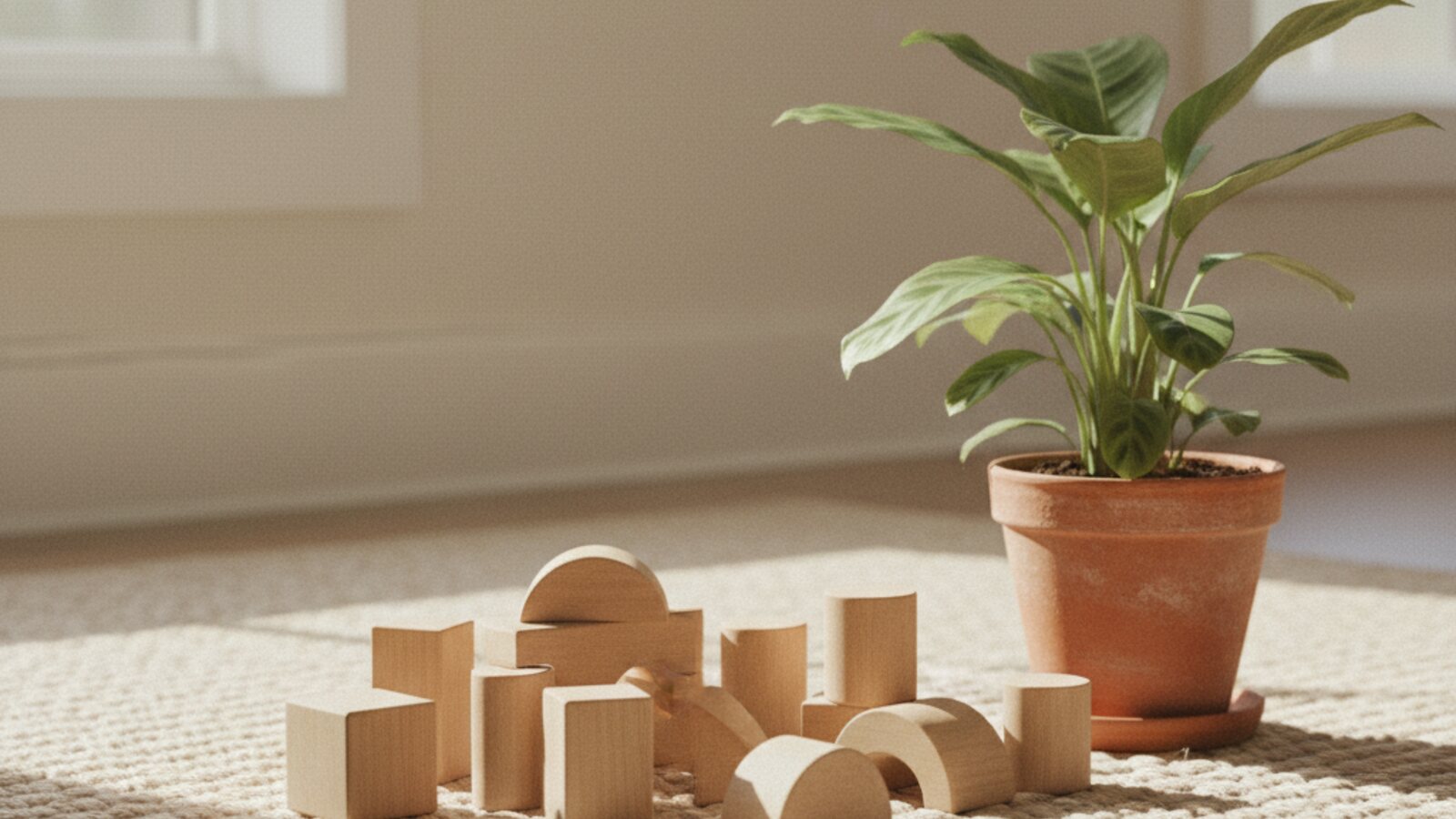 Gaux Editorial
“Enrichment” Is a Word Invented to Sell You Something
“Enrichment” is a marketing word, not a developmental one. The toddler-class industry grew out of a 1990s misreading of brain science that even its critics inside neuroscience called a myth. What the research actually rewards is ordinary and free: conversation, unstructured play, and the occasional productive stretch of boredom.
Read Gaux Editorial
The Group Chat Is Load-Bearing
The group chat is not a poor substitute for real community. It is real infrastructure. Research on weak and strong social ties shows that small, frequent contact measurably builds belonging, and parents report loneliness at striking rates. The 3am thread carries genuine weight. It just can’t carry everything, and knowing which is which is the useful part.
Read Gaux Editorial
Gentle Parenting Is the First Method With a Comment Section
Every American generation got a parenting method, from 1894’s feeding schedules to behaviorism’s no-hugging rule to 1946’s “trust yourself” to 1985’s timed sleep intervals. Gentle parenting is the first one practiced in public and scored in real time by an engagement algorithm. The problem was never the philosophy. It’s the audience.
Read Gaux Editorial
Who Profits From Mom Guilt
Mom guilt feels private, but it is also a business model. The baby-product economy is worth hundreds of billions of dollars a year, and its most dependable trigger is the question “am I doing enough,” a question designed to have no answer. Seeing how the guilt gets monetized is the fastest way to take its authority away.
Read Gaux Editorial
The Tradwife Is a Performance About Money
The tradwife trend isn’t really about tradition. The stay-at-home “traditional” household it stages lasted roughly two postwar decades, and the videos themselves are paid work, funded by sponsorships and brand deals. What the feed actually sells is time and attention, and that longing is worth taking seriously without the costume.
Read Newborn
When Sleep and Feeding Collide: Why It’s Often Developmental — Not Dysfunctional
An IBCLC explains why baby sleep and feeding overlap, why night feeding is common, and when collaborative support may help.
Read You
YouThe Daily Reset: A Simple Habit That Makes Family Homes Easier to Manage
Learn how a simple daily reset can support family routines, shared home management, and a more manageable household rhythm.
Read Pregnancy
Move With Purpose: How Prenatal Physical Therapy Sets the Stage for Easier Labor
Learn how prenatal physical therapy, mobility, breathing, and pelvic-floor preparation can support a more informed approach to labor readiness.
Read Newborn
10 Ways to Play with Your Newborn
Try 10 simple newborn activities from doula Rebecca Stiglitz, including songs, stories, sensory exploration, and low-pressure connection.
Read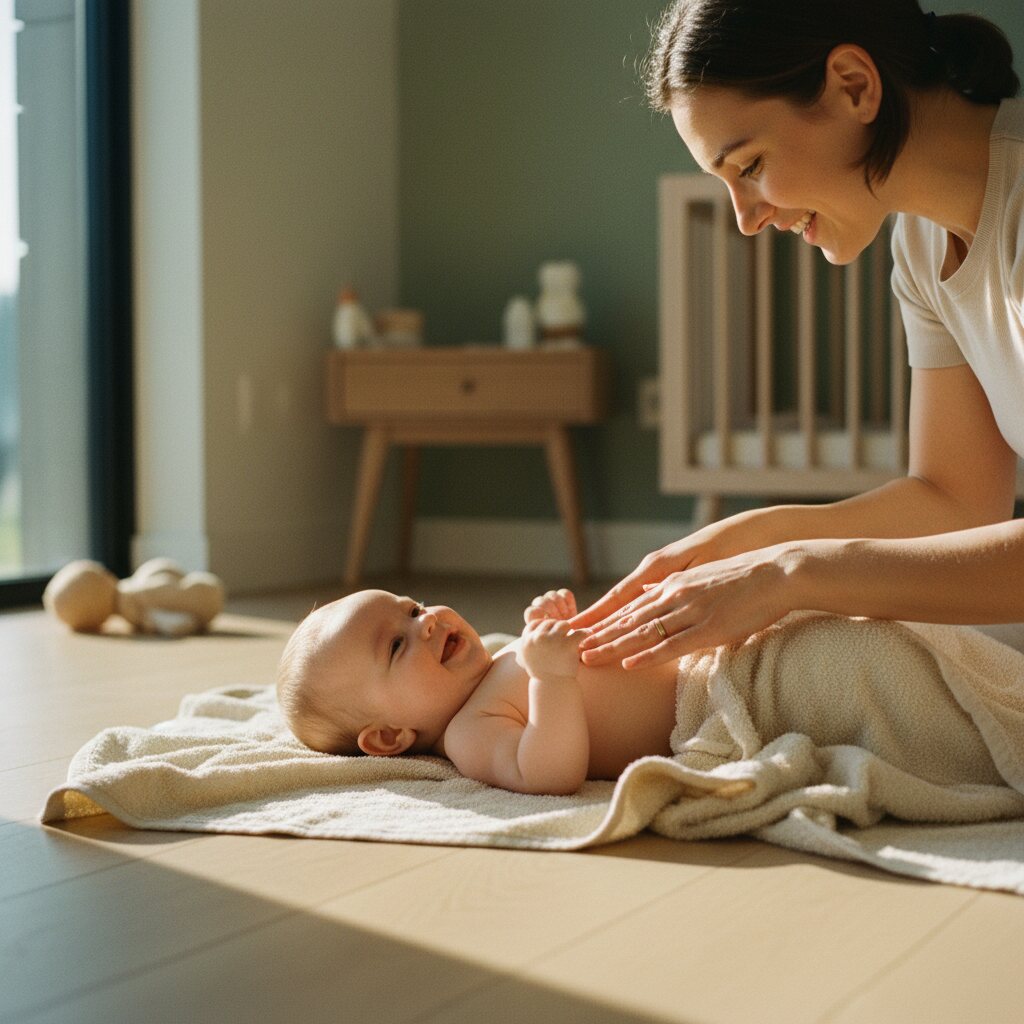 Newborn
Infant Massage and Emotional Security: Building Attachment through Touch
Explore infant massage benefits and gentle touch practices that support connection, responsiveness, and emotional security.
Read You
YouBaby Blues vs. Postpartum Depression: Key Differences Every Parent Should Know
Learn the difference between baby blues and postpartum depression, including timelines, symptoms, and when to reach out for postpartum support.
Read Professional Development
SEO for Perinatal Professionals: Why Qualified Providers Struggle to Get Found Online
A practical guide to SEO for perinatal professionals, including website language, local visibility, directories, and sustainable content.
Read Pregnancy
Prepare Your Pelvic Floor for Birth: What Most Women Aren’t Taught
Learn why pelvic floor preparation matters for birth, what research suggests, and how prenatal movement and relaxation can support informed preparation.
Read Newborn
The Science Behind Caregiver Mental Health and Early Brain Development
Explore how caregiver mental health, co-regulation, and practical support connect with early brain development and family wellbeing.
Read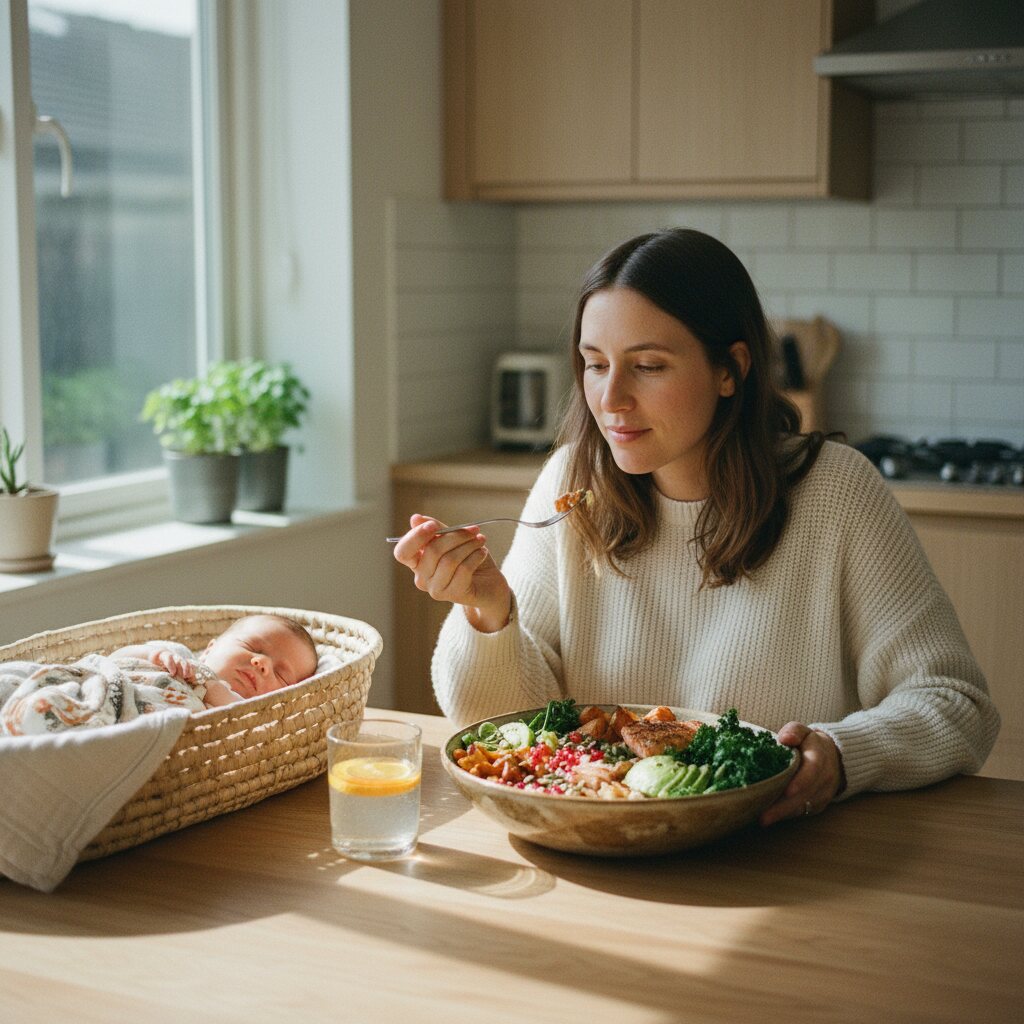 You
YouPostpartum Nutrition and Mood: The Overlooked Connection
Learn how postpartum nutrition can support energy, recovery, and mood, with practical guidance on iron, folate, zinc, magnesium, vitamin D, and blood sugar.
ReadGet expert advice in your inbox. No spam. No noise.
Fewer, better emails.