
A Fair Family Is Built in Small Repairs
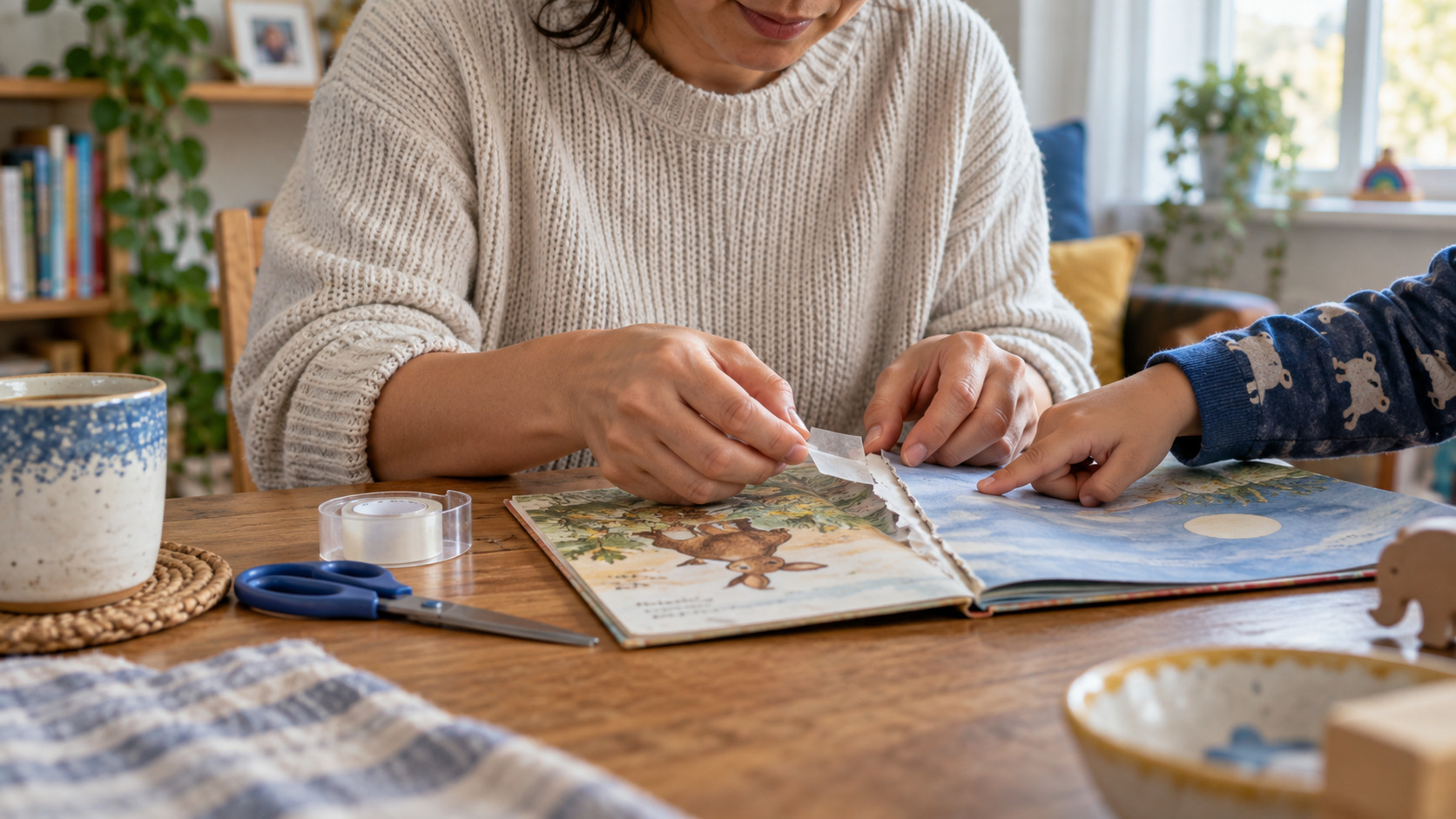
Two children, one tablet, one very specific idea about whose turn it is. You are summoned, you listen to two accounts that do not overlap, and you do the thing parents do: you decide, and then you spend the next twenty minutes defending the decision to a person who is four.
You tell yourself this is a lesson in fairness. It is more accurate to say it is a lesson in what fairness looks like when an adult is running it. The lesson your children are actually getting is about the process, not the ruling.
Fair is not the same as equal
The first thing children learn about fairness is that it looks like sameness. Same number of cookies, same size slice, same bedtime. That instinct is not wrong at four. It is just not the whole concept, and it takes years to expand.
The expansion runs in a fairly predictable direction. Younger children tend to equate fairness with identical shares. Older children and adults increasingly factor in need, effort, and history: the person who did more, or who needs more, may reasonably get more. That shift is part of moral development, and it does not happen because someone explained it once.
Which means the lecture you are tempted to deliver about how life is not always equal may need to be adapted to the child’s developing understanding. What lands instead is the behavior they observe: how turns were handled, whether the adult listened to both accounts, what happened when the adult was wrong.
Turn-taking is a skill, not a mood
Children are not naturally fluent at turn-taking. It requires holding two things in mind at once, your own want and the other person's, and delaying one for the other. That is a real cognitive load, and it comes online gradually.
So the useful interventions are structural rather than motivational.
A visible timer removes the negotiation. So does a rule that the person who had it last goes last, which converts a confrontational moment into a mechanical one. So does putting the second child's turn on a specific, named moment: after lunch, when the song ends, when I finish this. Vague promises of "later" are read as never, correctly, because to a four-year-old later is not a place.
The goal is to make the handoff predictable enough that it does not need to be re-argued every time, which is also what makes it tolerable.
The adults are the structure
Fairness in a family is mostly not taught. It is modeled, and the modeling is more specific than "be fair."
Children watch how the adults handle the actual asymmetries of the household: who gets the last piece, whose work is treated as interruptible, whose rest is protected, who apologizes first, who is allowed to be tired. They are building their model of what a fair arrangement is from those observations, and they are doing it while you think they are not paying attention.
This is uncomfortable because most households are not perfectly fair. That is fine and it is even useful, provided the adults are willing to name the gap. "You are right, I did get to sit down first and that was not fair" teaches more than a household that pretends to be symmetrical.
Repair when it goes wrong
The place fairness is actually built is in the aftermath of unfairness, which happens many times a day.
When the adult gets it wrong, and the adult will get it wrong, the repair has a shape. Name what happened. Say who it affected. Restore what can be restored. Do not add a clause about how tired you were that makes the child responsible for managing your feelings.
When the child gets it wrong, the response that builds the skill is not a lecture about character. It is a return to the mechanics: what did you want, what did they want, what would be a way to handle it next time. This works far better after everyone is calm, which means it often works better ten minutes later than in the moment.
And when the situation is genuinely unfair in the child's favor, say so. Children can survive hearing that something went their way for a reason. What they struggle with is the sense that the rules are unspoken.
The sibling ledger
Siblings keep score, and the score is not always accurate. But the score is evidence of something, which is that they are paying attention to fairness and want it to be real.
Where you can, avoid being the permanent judge. A system that decides for itself, a timer, a rota, an alternating rule, takes the adult out of the position of ruling on every dispute, which reduces both the volume and the sense that fairness is a favor granted by whoever happens to be in charge.
Where you have to judge, judge slowly and out loud. Two accounts, both heard. That process is the lesson. The process is also part of what children learn.
---
Related reading: Continue with Gaux family classes at gaux.org/classes, and more in the Family Journal.
Sources and further reading
- Piaget, J., The Moral Judgment of the Child (Free Press; English translation, 1932/1965). Read source
- Damon, W., The Social World of the Child (Jossey-Bass, 1977). Read source
- American Academy of Pediatrics, Emotional Development: 2 Year Olds, HealthyChildren.org. Read source
Continue with the Family Journal and Gaux classes.
Walk this window with our experts.
Gaux experts teach small-group classes with real Q&A and replays included.
See the classesGaux Team
Gaux Teamteaches on Gaux, where experts share what they’ve learned from real practice with families.
Get expert advice in your inbox. No spam. No noise.
Fewer, better emails.