
No one asks working parents how they're really doing
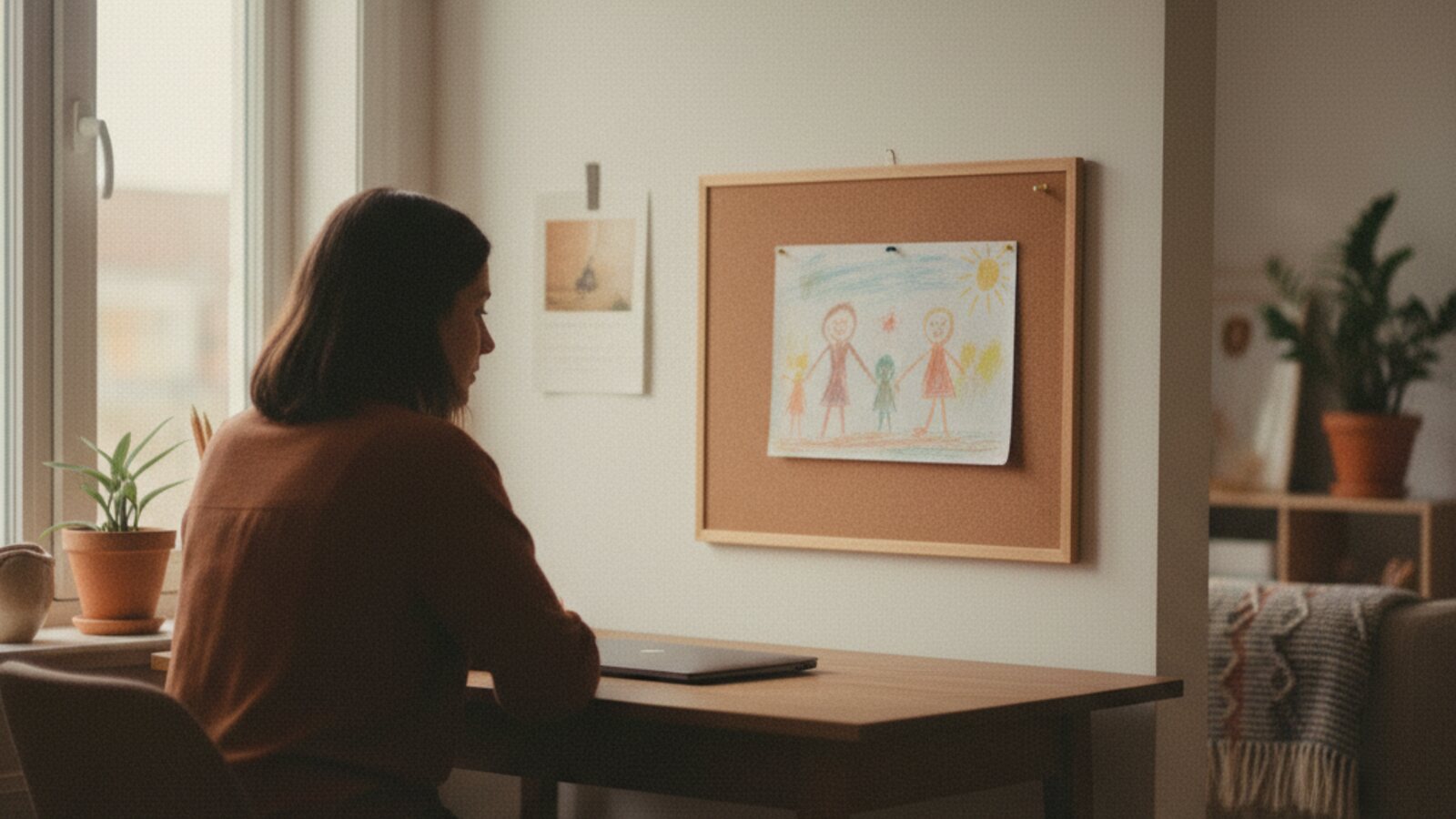
Notice the questions you get. How are the kids. How's the new role. Did the big thing at work go okay. Is the baby sleeping. People are kind; they're curious; they mean well. And nearly every question routes around you to the things you're responsible for. Almost no one stops, looks at you, and asks the plain one: how are you? Not the logistics. You.
It's a strange kind of invisibility — being constantly asked about while rarely being asked after.
You became the infrastructure
Somewhere in the shift to working parenthood, you stopped being a person people check on and became the thing that holds up other people. The load-bearing wall. And nobody asks the wall how it's feeling. They ask whether the roof is dry, whether the rooms are warm — which are questions about what the wall is doing, never about the wall itself.
This happens so gradually you don't clock it. The concern that used to flow toward you as a young adult quietly reroutes toward your children, your output, your household. You're now the source of care, not a recipient of it. And sources, we assume, simply flow. We don't ask the well how it's holding up until the day it runs dry.
Why you stopped expecting it
Here's the part that stings. After enough time, you stop expecting the question — and then you stop being able to answer it. Someone does ask, genuinely, how you're doing, and you hear yourself say "good, busy, you know how it is" before you've even checked. The honest answer has gotten so little use that it's not loaded and ready. You'd have to go and find it.
That reflexive "I'm fine" isn't a lie exactly. It's a muscle that atrophied. When no one has asked in earnest for a long while, you lose the habit of knowing. You become a stranger to your own weather because nobody's given you a reason to check the sky.
The cost of being unasked
Being unasked does quiet damage. Feelings that never get spoken don't evaporate; they compress. The unexamined resentment, the loneliness you'd feel embarrassed to name, the low hum of depletion — with no invitation to say any of it, it all just packs down tighter, and you carry the denser version of it into the next day.
There's a particular ache to being surrounded by people and still feeling that no one is actually tracking your inner life. Not because they don't love you — they do — but because you've been so competent for so long that your fine-ness became the assumption everyone builds on. You made your own struggle easy to overlook, and then had to live inside the overlooking.
Asking yourself, since no one else will
Until the people around you get better at it — and it's worth asking them to, directly, because they often simply don't realize — some of this falls to you. Not as one more task, but as a small act of turning toward yourself. Actually asking, in a quiet moment: how am I, really? And then waiting for the true answer instead of the automatic one. It can feel awkward, even self-indulgent, the first few times. It isn't. It's you refusing to be invisible to yourself, too.
And if what surfaces when you finally ask is heavier than you expected — a flatness that won't lift, a dread you can't place, a sense of running on empty that rest doesn't touch — that's worth saying out loud to someone equipped to hear it, a friend who'll really listen or a professional who's trained to. You don't have to wait for someone else to notice before you get to be looked after.
You're allowed to be a person here
The deepest reframe is also the simplest. You are not only the one who holds everything. You are also a person inside the life you're holding up — with your own tiredness, your own longings, your own need to be asked after and answered. That person didn't disappear when you became load-bearing. She just got very quiet, waiting for someone to ask.
Consider this the asking. How are you, really?
The women inside Gaux talk about this every day, in rooms where nobody performs. Come inside.
Continue with the Family Journal and Gaux classes.
Walk this window with our experts.
Gaux experts teach small-group classes with real Q&A and replays included.
See the classesGaux Team
Gaux Teamteaches on Gaux, where experts share what they’ve learned from real practice with families.
Get expert advice in your inbox. No spam. No noise.
Fewer, better emails.